Beginners only — classes from November 2026
Turn up with nothing. Leave with a track.
2 hours on Logic Pro with CJ Prem, for kids, teens and grown-ups who have never made music on a computer before. No theory, no homework and nothing to catch up on — you start from a blank screen and finish with a song of your own, on the day, in one sitting.
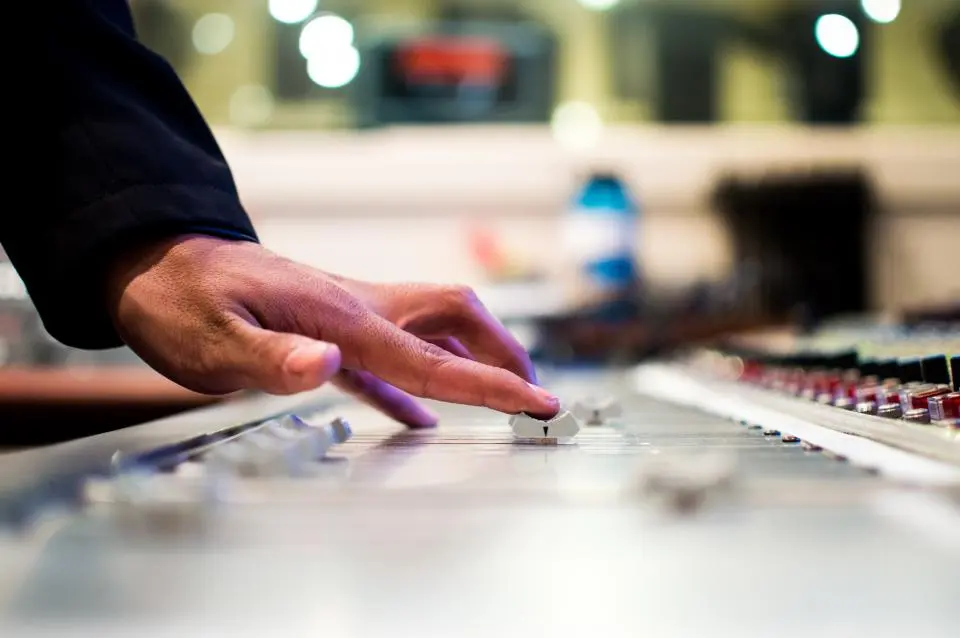
● The Logic Pro arrangement window, roughly ninety minutes in — five tracks, one song, made from nothing that afternoon.
Read this bit first
This is not a masterclass
It is the first two hours. We start at “I have never opened this program” and stop at “here is a song I made”, and that is the whole of it.
If you already write in a DAW, record your own demos or know what a bus is for, you will be bored by the first twenty minutes. Book a room instead — that is what the rooms are for, and we would rather tell you now than take your A$120.
What it is
- Two hours, one sitting, one finished track
- Absolute beginners, every single time
- Hands on the keyboard inside the first ten minutes
- Everything provided — turn up with nothing
What it is not
- Not a masterclass, and not a step up for anyone already producing
- Not a course — there is nothing to enrol in afterwards
- Not a theory lesson. No notation, no scales, no exam
- Not a demonstration. You will not sit and watch somebody else work
01 — How the two hours go
Making something from minute one
Nobody sits through an introduction. The machine is on, Logic Pro is open, and there is a sound coming out of the speakers before anyone has taken their jacket off.
- 0:00
Open the lid
Logic Pro is already running on your machine and the headphones are already plugged in. We name the song. That is the entire setup, and it is the last boring thing that happens.
- 0:20
Find a beat
Pick a drum pattern you like the sound of, then start pulling it apart until it is yours. This is usually the point where everyone in the room starts nodding along without noticing.
- 0:45
Put yourself in it
Play a line on the keyboard, sing something into the microphone, or record yourself saying one word and turn it into an instrument. You do not need to be able to play anything. It all counts and it all goes in.
- 1:15
Build it into a song
An intro, the loud bit, the quiet bit, an ending. You will find out what an arrangement is by making one, which takes about ten minutes and sticks for good.
- 1:45
Mix it, name it, take it home
Balance it so everything can be heard, give it a title, and walk out with the file. It is yours — put it on your phone, send it to your friends, play it to whoever will sit still for it.
02 — Who it is for
Nine years old, or fifty-nine
The class does not change depending on who books it, because the starting point is the same for everybody in the room: nothing. That turns out to be the most relaxing way to learn this, whatever age you are.
Kids, 9 to 12
A parent is welcome to stay
The whole session is built around getting a sound out of the speakers inside the first ten minutes, because that is roughly how long we have got. No reading music, no waiting quietly.
Teenagers
Phone producers welcome
If they already make beats in an app, this is the step across to what records are actually made on. If they have never opened anything in their life, that is the more common starting point here.
Adults starting at zero
No, you are not too late
You do not need to play an instrument, read music, or own anything. Plenty of people book this in their forties and leave with a track they wrote that afternoon.
03 — Who takes it
CJ Prem
CJ runs the class the way you would want somebody to teach a curious beginner: no jargon before it is needed, no waiting your turn, and nobody goes home with something half-finished.
Questions are the point of the session rather than an interruption to it. If something does not make sense, say so and we stop and do it again — six people is a small enough room that this costs nothing and helps everybody.
04 — What you take home
Nothing ends at the door
The point of a two-hour class is not the two hours. Everybody leaves with the song they made, the project file behind it, and a plain-English sheet on how to carry on doing this at home without spending anything much.
The track you made
Bounced to an audio file before you leave and emailed the same evening. Play it to whoever you like — it is yours, with no strings on it.
The Logic project
Every region, every part, exactly as you left it. Open it again at home and keep going from the bar you stopped on.
The home studio sheet
One page, written by us, on setting a first studio up in a bedroom: what to buy first, what can wait, and how to get a clean recording out of a room that was never meant for it.
A standing invitation
Get stuck a month later and email us. Answering a question about a session you started here is not a paid service, it is just the point of the place.
05 — Setting one up at home
A bedroom is enough to start
Parents ask this before the class is over: what do we need to buy. Usually the answer is far less than the internet suggests, and in the right order it costs almost nothing to begin.
- 01
You already own most of it
A laptop from the last five or six years and a pair of wired headphones is a studio. Logic Pro is a one-off purchase with a long free trial, and its stock instruments are the same ones on records you know.
- 02
Then a small interface and one microphone
A two-input interface and a single decent condenser mic covers vocals, acoustic guitar and anything else in the room. This is the one part worth spending on, and it is the last part most people buy.
- 03
Treat the room before you upgrade the gear
A wardrobe of clothes, a heavy curtain, a rug and a doona over a couple of chairs will do more for a bedroom vocal than any amount of new hardware. Corners first, then the wall behind the mic.
- 04
What not to buy yet
Studio monitors, a MIDI controller with more than 25 keys, plug-in bundles, and anything sold as a bundle to beginners. None of it makes a song better this year.
And we will help you do it
Setting one up for your kid, together
If your child comes out of the class wanting to keep going, email us before you buy a single thing. Tell us what is already in the house and what you can spend, and we will send back a specific list — not a category, an actual short list — and the order to buy it in. If you would rather do it in person, bring the laptop down and we will set Logic Pro up on it with you, get a first recording working in the room, and show whoever is going to use it how to open it again tomorrow.
There is no charge for this and we do not sell equipment, so there is nothing we are steering you towards. It is half an hour that saves people a few hundred dollars and a lot of gear that ends up in a cupboard.
Ask about a home setup06 — The details
A$120 a head
One price, one session, everything included. There is no kit to buy first and nothing to sign up to afterwards.
- Who it is for
- Complete beginners, from about nine years old, no upper limit
- Length
- 2 hours, a single session — not a term, not a series
- Price
- A$120 per person, GST included
- Class size
- Six, so nobody spends the afternoon waiting their turn
- Software
- Logic Pro, set up and open before you walk in
- Where
- Aether, the learning room — one floor, step-free, no stairs to it
- What to bring
- Nothing. A machine and headphones each are here for you
- What you leave with
- Your finished track as an audio file, the Logic project to keep working on, and the home studio sheet
- Classes from
- November 2026 — bookings are open now
07 — Get a spot
Come and make something
Bookings are open now for classes from November 2026. Tell us who is coming, roughly how old they are and what sort of day suits — a weekday after school, a Saturday morning, somewhere in the school holidays — and we will send back the dates we are running. Classes are six people, so they do fill.
Book a place